
GRC FAQFrequently asked questions
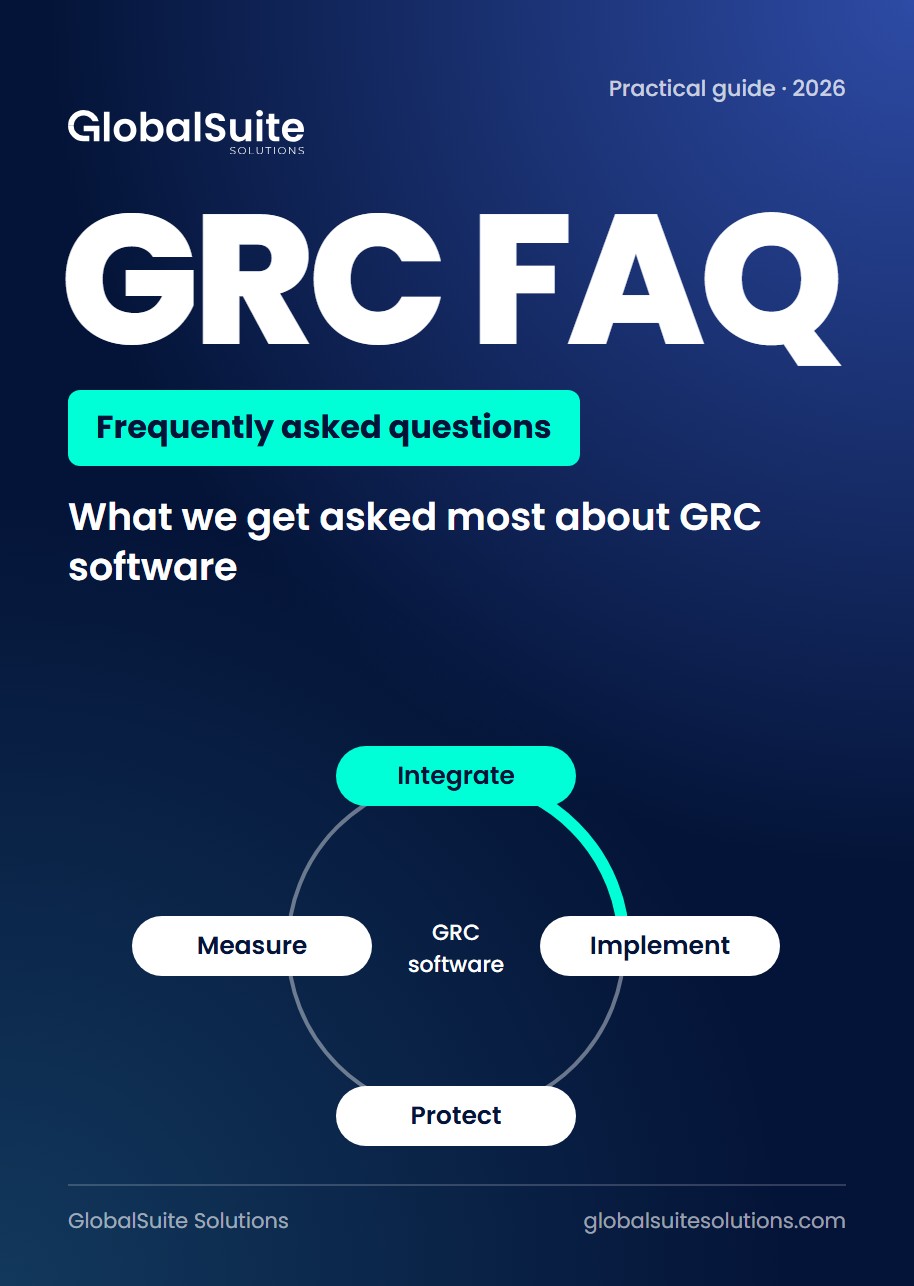
What we get asked most about GRC software
Plain answers on integrations, implementation, return, risk and data security in GlobalSuite®.
Download the guidePlatform
All-in-one GRC platform
AI built into every module
The common engine behind every module
GRC tailored to your industry
Connect GlobalSuite® to your tools
Standards and frameworks
ISO standards
Regulations
Document once, comply with all.
Resources
 Success storyEMT Madrid centralises its data protection management in GlobalSuite®Read the story

 G2 reviewsWhat the people who use GlobalSuite® every day say about itRead reviewsA customer? Leave a review
Popular searches
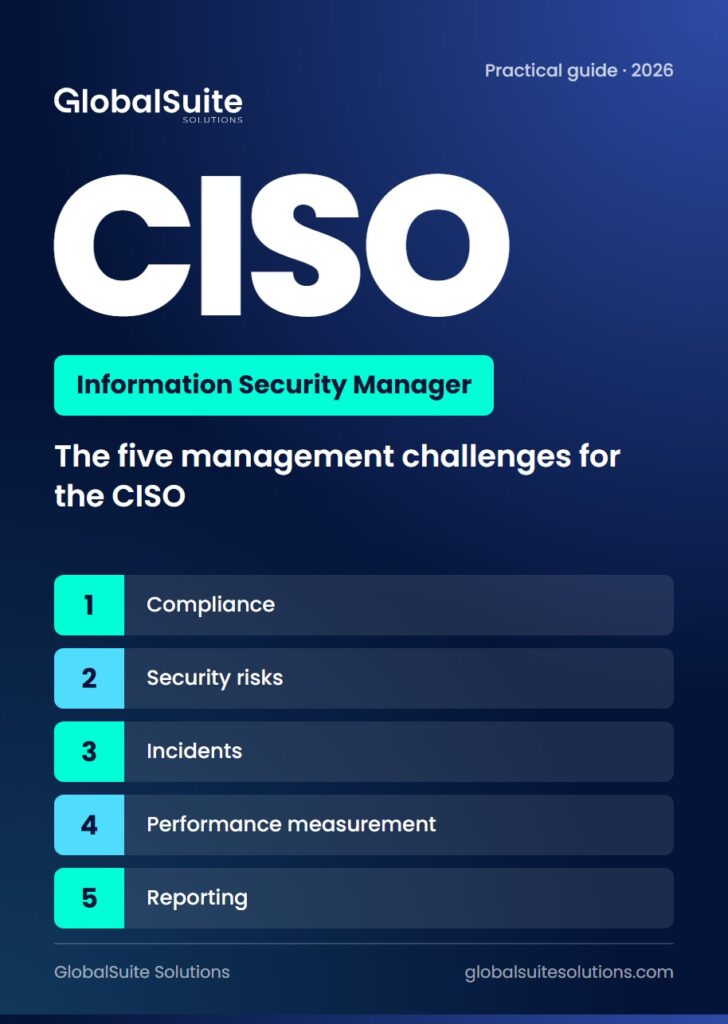
Practical guide · 2026
Information Security ManagerCompliance, risk, incidents, performance and reporting: five management problems we see in real projects and how we solve them.
Download the free guideThe Chief Information Security Officer carries a heavy load. According to ISACA, a CISO typically stays in the role one to two years, and 90% would accept lower pay in exchange for a better work-life balance.
This guide looks at the management side of the job: making the best use of the resources you have to meet your objectives. The five challenges come from real cases in our consulting and implementation projects. For each one we describe the situation we found, what it means for the security officer and how we solved it with GlobalSuite®.
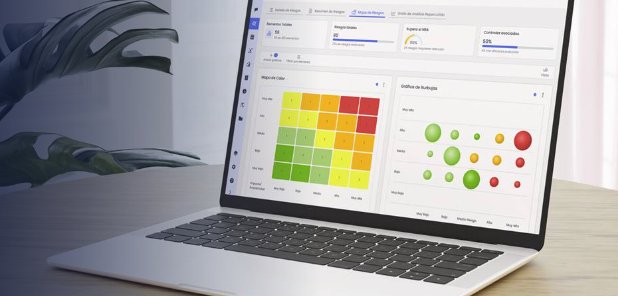
Many teams still run security risks in Excel: one sheet per process, duplicate names for threats and controls, hours of work to build a company-wide map, and a reassessment that starts almost from scratch every time. The guide shows what changes when catalogues, surveys and calculations live in one tool.
The guide draws on ISO 27001:2022, ISO 31000, ISO 27004, COBIT 2019, NIST CSF and PCI DSS, and on ISACA's article on CISO burnout.
Plain answers on integrations, implementation, return, risk and data security in GlobalSuite®.
Download the guide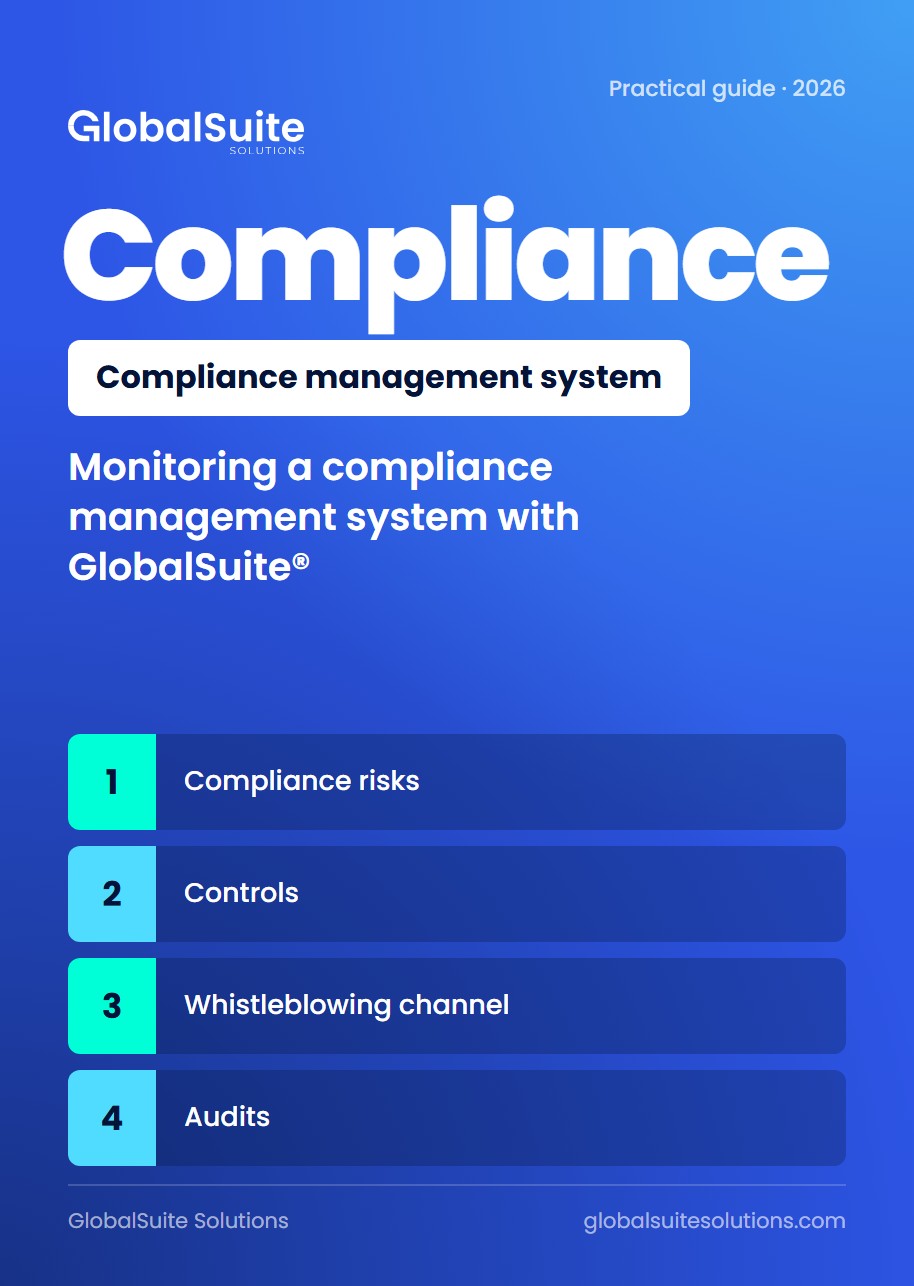
Every requirement of a compliance management system, from scope to audit, run in GlobalSuite®.
Download the guide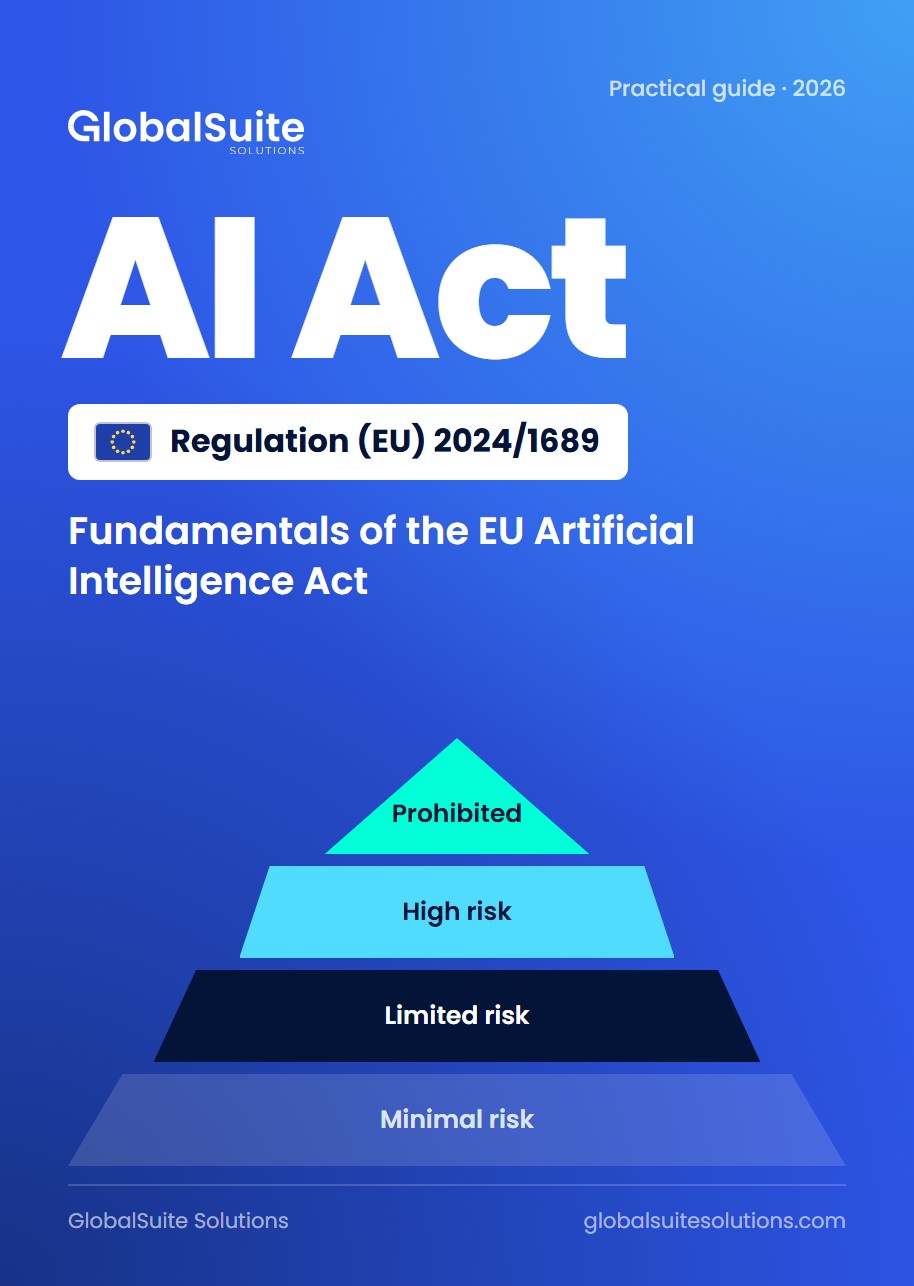
Deadlines, roles, risk categories, fines and first steps to prepare for the AI Act.
Download the guide