
GRC FAQFrequently asked questions
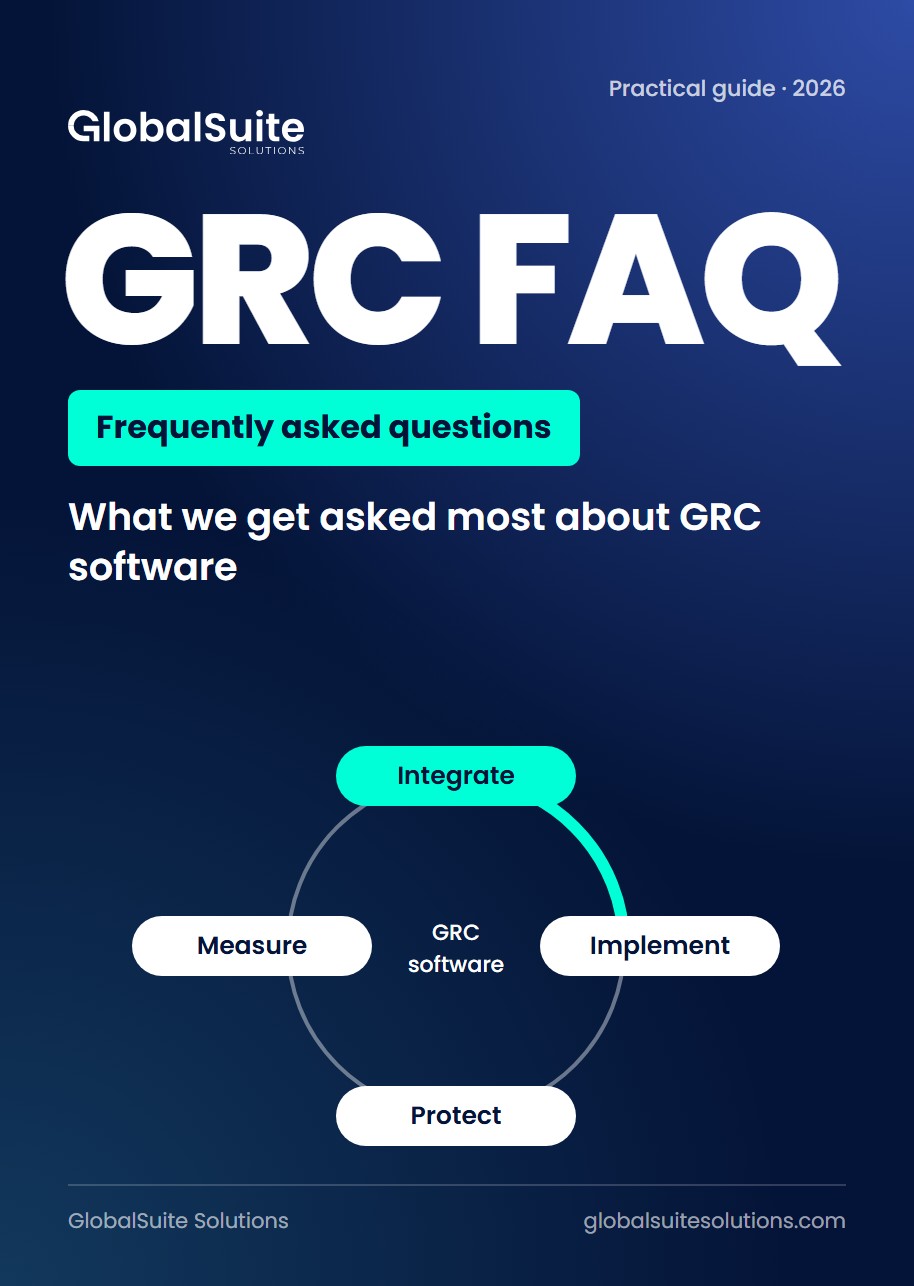
What we get asked most about GRC software
Plain answers on integrations, implementation, return, risk and data security in GlobalSuite®.
Download the guidePlatform
All-in-one GRC platform
AI built into every module
The common engine behind every module
GRC tailored to your industry
Connect GlobalSuite® to your tools
Standards and frameworks
ISO standards
Regulations
Document once, comply with all.
Resources
 Success storyEMT Madrid centralises its data protection management in GlobalSuite®Read the story
 G2 reviewsWhat the people who use GlobalSuite® every day say about itRead reviewsA customer? Leave a review
Popular searches
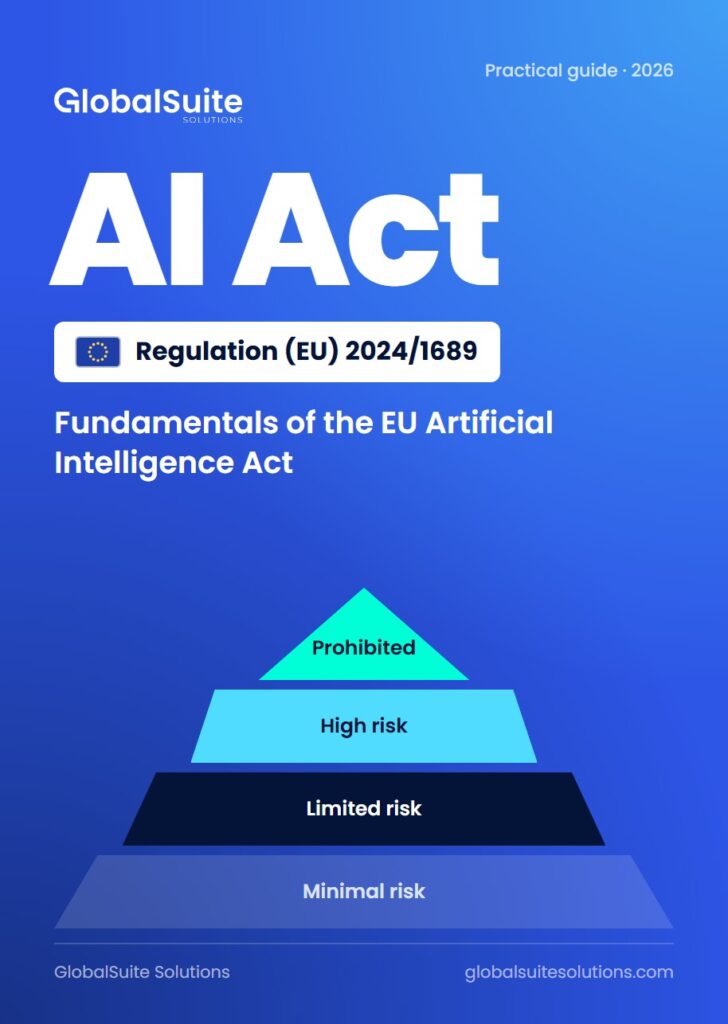
Practical guide · 2026
Regulation (EU) 2024/1689What Regulation (EU) 2024/1689 asks of organisations that develop, integrate or use AI, and how to start getting ready.
Download the free guideThe AI Act, Regulation (EU) 2024/1689, is the European Union's first comprehensive law on artificial intelligence. It applies to public and private organisations that develop, integrate or use AI, and it comes with fines of up to 15 million euros or 3% of worldwide annual turnover.
This guide covers the essentials: the deadlines, the parties involved, how systems are classified by risk, the penalties and where to start. It is written for the legal, compliance and risk teams who have to work out how their organisation uses AI and what that means.
The Act applies in stages. The bans have applied since 2 February 2025 and the transparency obligations apply from 2 August 2026. The Digital Omnibus on AI, in force since late July 2026, moved the obligations for Annex III high-risk systems to 2 December 2027 and those for Annex I systems, the ones built into regulated products, to 2 August 2028.
List the AI systems you use and your role in each, classify them by risk, decide how each one is assessed and who oversees it, and document how AI is developed, integrated and used in your organisation.
Plain answers on integrations, implementation, return, risk and data security in GlobalSuite®.
Download the guide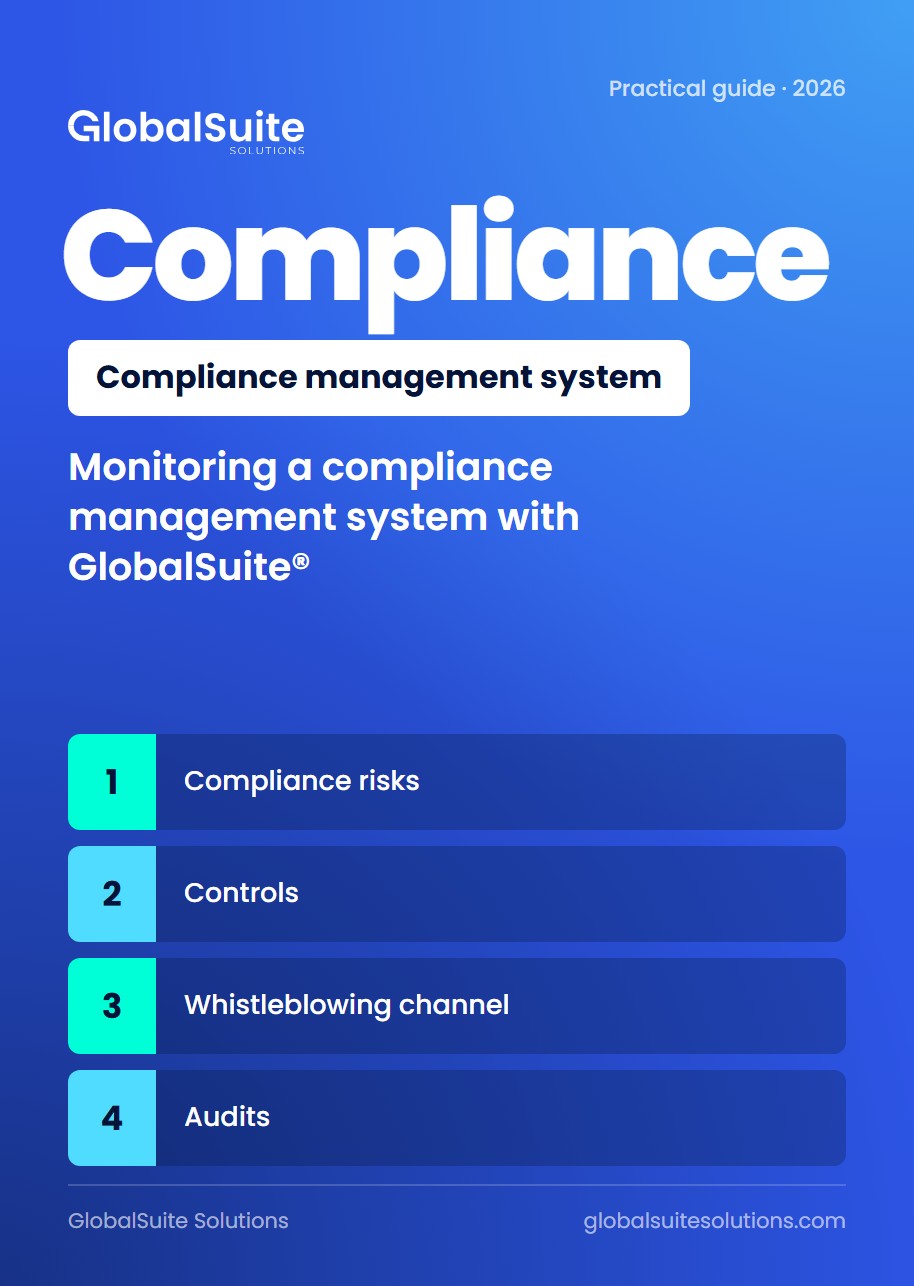
Every requirement of a compliance management system, from scope to audit, run in GlobalSuite®.
Download the guide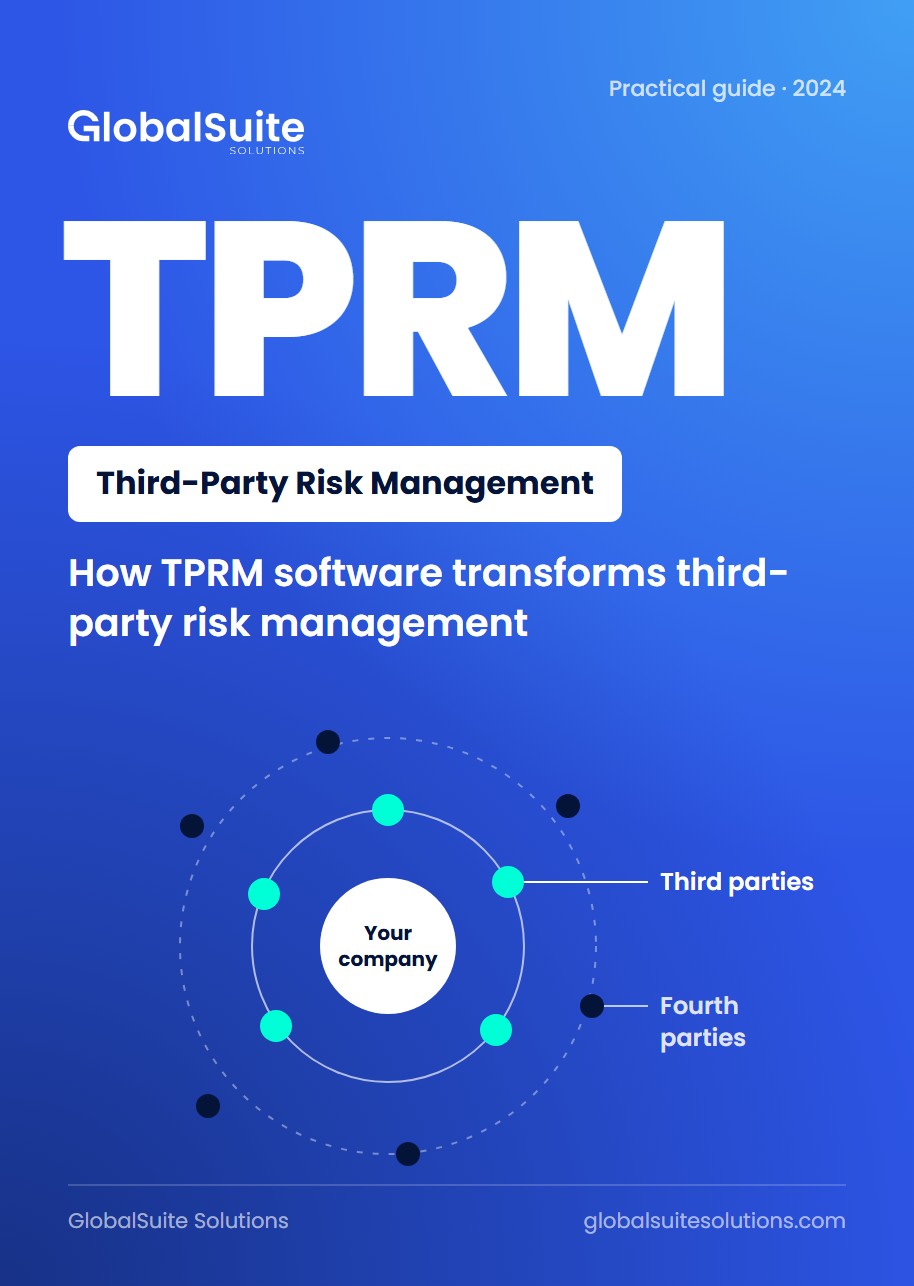
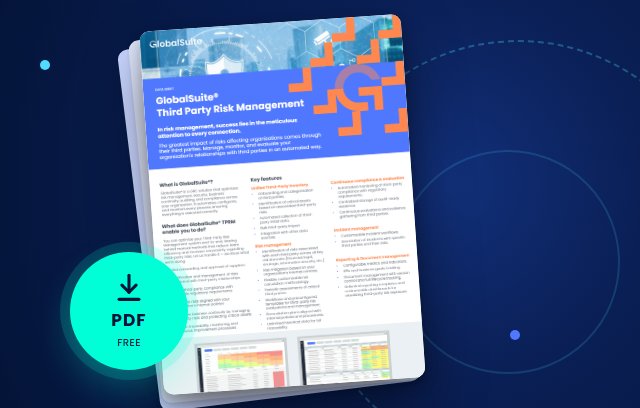
What third-party risk is, what a TPRM tool should do and three real use cases.
Download the guide