






DORARegulation (EU) 2022/2554

DORA Compliance: Prepare Your Business with These 5 Key Pillars
What DORA is, its key pillars and an action checklist.
Download the guidePlatform
All-in-one GRC platform
AI built into every module
The common engine behind every module
GRC tailored to your industry
Connect GlobalSuite® to your tools
Standards and frameworks
ISO standards
Regulations
Document once, comply with all.
Resources
 Success storyEMT Madrid centralises its data protection management in GlobalSuite®Read the story

 G2 reviewsWhat the people who use GlobalSuite® every day say about itRead reviewsA customer? Leave a review
Popular searches
Practical guide · 2024
Third-Party Risk ManagementThe features third-party risk software needs, and what three organisations achieved after implementing it.
Download the free guideA third party is any external entity your organisation does business with: suppliers, manufacturers, distributors, agents or partners. Each one can open a security breach or a compliance failure, and the more you have, the larger your attack surface.
This guide explains what third-party risk management (TPRM) is and how software helps you identify, assess and mitigate those risks. It is aimed at executives and risk management professionals evaluating a solution.
According to the figures in the guide, 80% of organisations suffered a supply chain disruption in 2023 and 88% have little confidence in the quality of their TPRM process. Regulations such as the GDPR and DORA have also raised the bar on what is expected for third parties.
The guide walks through the features of GlobalSuite® TPRM and what they bring day to day: less manual work in assessments, information from every department in one place and a shared repository of your third parties' compliance evidence.
What DORA is, its key pillars and an action checklist.
Download the guide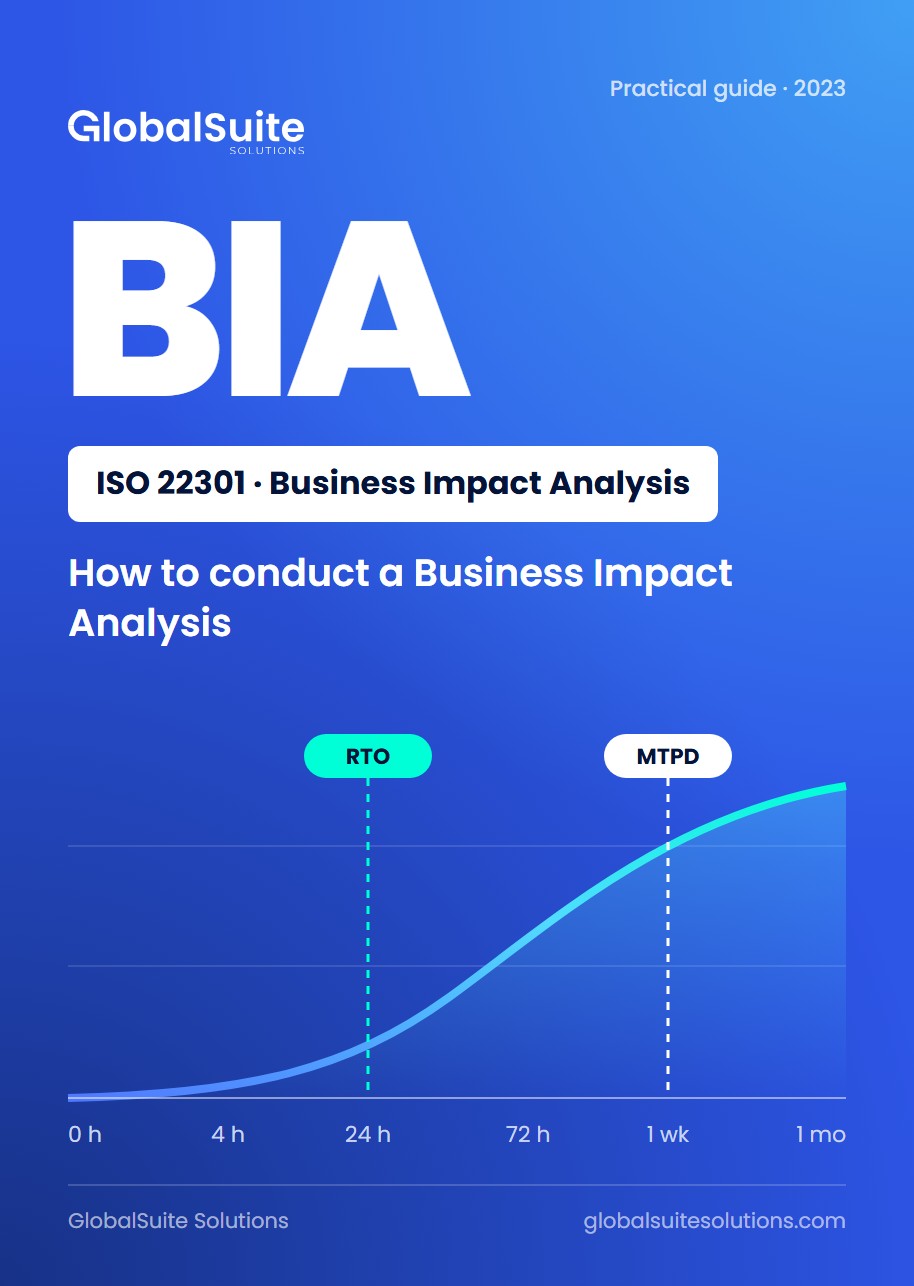
The steps to run a BIA and feed its results into your continuity plan.
Download the guide
Seven keys to measure what GRC software delivers.
Download the guide