





What is ISO 9001?
ISO 9001 is the standard that sets the requirements for a company’s Quality Management System, and certification against it is widely recognized in business. Since 16 September 2026 the current version has been ISO 9001:2026, a moderate revision of the 2015 edition; certified companies have until 30 September 2029 to move to the new version. Quality objectives remain a requirement in both. ISO 9001 is one of the certifications companies ask for most, and its aim is the highest quality in internal management, organization and planning. That is why the methods used need to be implemented well, so that customers, employees, suppliers and others are satisfied.
What ISO 9001 quality objectives must look like
Every organization has to set quality objectives for its business processes, managed by the relevant functions and areas of the company. These objectives are a requirement of the Quality Management System. In ISO 9001:2015, clause 6.2.1 requires quality objectives to:
- be consistent with the quality policy
- be measurable
- be monitored
- take into account applicable requirements
- be relevant to the conformity of products and services and to customer satisfaction
- be communicated
- be updated as appropriate
When implementing an ISO 9001 Quality Management System, the company has to document information on the quality objectives and on who is responsible for them. These are the areas where companies usually set their quality objectives. Further down you will find specific examples, each with its indicator and target.
Management plans
One area for quality objectives is the company’s management plans and actions that ensure efficiency, motivation and quality in internal processes.
ISO 9001 documentation and updates
Every set of rules must be up to date and documented, so one quality objective is to make sure all of the organization’s information is complete, reviewed and current. Quality manuals should also be in place so that each procedure is carried out effectively.
Facility safety requirements
All the facilities where the business operates have to meet quality and facility safety standards. These requirements are based on strategic, expansion and support plans that form part of the quality objectives.
A good working environment
Beyond facilities, it is important to consider employee wellbeing and the quality of the working environment. A good working environment with decent conditions goes a long way towards effective, productive work in every area.
Process evaluation
Every strategy, procedure and task has to be measurable so you know what it achieves. The same applies in a Quality Management System: one of the requirements is being able to evaluate the company’s processes, analyse how internal operations perform and compare them with the expected results.
Product and service quality
A business exists to offer customers the best product or service on the market. One quality objective is to make sure production, sales and after-sales processes deliver the highest quality and customer satisfaction.
How to set quality objectives in your company
When planning how to achieve each objective, clause 6.2.2 of ISO 9001:2015 requires you to determine what will be done, what resources are needed, who is responsible, when it will be completed and how the results will be evaluated. In practice, that comes down to these questions:
- How will the objectives be achieved?
- Who is responsible?
- When will they be achieved?
- What resources does the company need?
- How many indicators are needed to know the results?
Quality objectives can be short, medium or long term, and they must be stated in measurable, quantifiable terms so you can check whether they are met or set deadlines for meeting them. Before choosing the objectives, it is important to know what resources the company has to measure the results and who will be in charge of monitoring them.
Examples of measurable quality objectives
An objective like “improve quality” cannot be audited: nobody knows when it has been met. The ones that work say what is measured, how much you want to achieve, who is accountable and by when. These six cover different areas of a manufacturing company and follow what clause 6.2 of the standard asks for:
Monitoring is what makes the table useful. If the indicator is reviewed every month, management can see early on whether the objective is on track or the actions need to change. This is what tracking the on-time delivery objective over a year could look like:
In our view, less is more: five or six well-measured objectives tell the management review more than twenty that nobody follows. And the target has to start from where you are today. If you currently deliver 93% of orders on time, setting 99% for next year will not motivate anyone.
Automating quality management
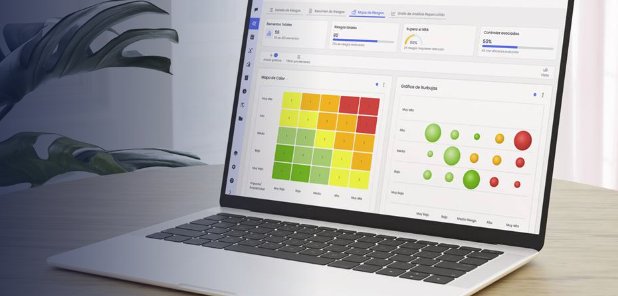
Technology lets companies automate internal processes with software that does away with manual tasks. One example is GlobalSuite® ISO 9001 Quality Management software, which supports the implementation, management and maintenance of management systems. It gives you one place to centralize all documentation, risks and controls, automate updates, maintenance and reporting, and run several management systems (ISO 9001, ISO 14001 and ISO 45001).