



What is the COSO model?
COSO (Committee of Sponsoring Organizations of the Treadway Commission) is a US-based organisation made up of private-sector bodies, set up to provide organisations with a common model of guidance on core aspects of:
- executive management and governance,
- business ethics,
- internal control,
- enterprise risk management,
- fraud control, and
- financial reporting.
How the COSO model has evolved
1992: publication of the Internal Control – Integrated Framework (the COSO Report or COSO I), an integrated framework to help companies assess and improve their internal control systems.
2004: publication of COSO ERM (Enterprise Risk Management – Integrated Framework), or COSO II, which helps companies improve internal control through a more complete risk management process.
2013: publication of COSO III, an update of the 1992 internal control framework.
2017: publication of COSO ERM 2017 (Enterprise Risk Management – Integrating with Strategy and Performance), which broadens the risk management framework to cover more of the risks organisations face and links it directly to strategy and performance.
The components and principles of internal control (COSO 2013)
The 2013 internal control framework (Internal Control – Integrated Framework) is the reference for internal control over financial reporting, for example under the SOX Act. It organises internal control into five components and seventeen principles. For the system to be considered effective, all five components have to be present, functioning and operating together; the principles explain what each one means in practice.
- 1Integrity and ethical values
- 2Independent board oversight
- 3Structure, authority and responsibility
- 4Commitment to competence
- 5Accountability
- 6Clear, specific objectives
- 7Risk identification and analysis
- 8Fraud risk
- 9Significant change
- 10Control activities that reduce risk
- 11General controls over technology
- 12Policies and procedures
- 13Relevant, quality information
- 14Internal communication
- 15External communication
- 16Ongoing or separate evaluations
- 17Evaluating and communicating deficiencies
If what you need is a framework for risk management across the whole organisation, beyond internal control, the reference is COSO ERM 2017, covered below.
The five components and twenty principles of COSO ERM 2017
COSO ERM 2017 groups its twenty principles into five components. The principles are the practical checklist for seeing what the organisation already has in place and what is missing.
- 1Board risk oversight
- 2Operating structures
- 3Desired culture
- 4Commitment to core values
- 5Attracting, developing and retaining talent
- 6Analysing business context
- 7Defining risk appetite
- 8Evaluating alternative strategies
- 9Formulating business objectives
- 10Identifying risk
- 11Assessing severity
- 12Prioritising risks
- 13Implementing risk responses
- 14Portfolio view of risk
- 15Assessing substantial change
- 16Reviewing risk and performance
- 17Improving risk management
- 18Using information and technology
- 19Communicating risk information
- 20Reporting on risk, culture and performance
Components of the COSO ERM model
The five components of COSO ERM 2017 work together to integrate risk management with strategy and performance:
What is the ERM methodology for enterprise risk management?
Enterprise risk management (ERM, Enterprise Risk Management) is a plan-based business strategy that aims to identify, assess and prepare for any risk or event that could affect an organisation’s operations and objectives, positively or negatively.
The aim of ERM is to assess the risks that matter to the company (financial, strategic and operational), prioritise them and make informed decisions about how to handle them. The risk management plans it produces estimate the impact of various threats and describe the possible responses if one of them materialises.
An effective ERM process should be an important strategic tool for business leaders. The risk insights that come out of ERM should be a major input to the organisation’s strategic plan.
Because risks constantly emerge and evolve, it is important to understand that ERM is a process that has to stay active and alive, with ongoing updates and improvements.
The structure of the enterprise risk management framework applies regardless of the size of the organisation or how it chooses to categorise its risks, and it is designed to help management and boards handle the following main aspects properly:
- Identifying all the risks that may affect strategy and business operations, and how they relate to each other.
- The acceptable level of risk.
- How to manage risks (culture, governance and policies).
- How to obtain the information needed to manage risks.
- How to control risks.
- How to measure and assess the different risks.
- How to respond to risks.
- Which tests of the response to adverse scenarios are most suitable.
One of the main models developed for effective enterprise risk management (ERM) today is the COSO ERM 2017 model.
Benefits for organisations
COSO ERM in 2026: towards a more strategic ERM
The reference framework is still COSO ERM 2017, but COSO has continued to publish complementary guidance worth knowing about, because it shows where risk management practice is heading:
- From guidance to action (2026): in May 2026, COSO published From Guidance to Action: Exploring Practical Enterprise Risk Management, a paper aimed at strengthening the strategic relevance and real impact of ERM programmes. One telling figure from its global survey: although 98% of practitioners believe ERM should play a more strategic role, only 7% say it is fully integrated into their strategic decisions. So the challenge is no longer what ERM is, but how to make it work day to day.
- Alternative data (2024): the guidance Alternative Data: The COSO Perspective looks at how to bring non-traditional data sources (social media analytics, IoT sensors, web scraping or ESG indicators) into ERM without introducing unacceptable risks around data quality, privacy or bias.
- AI governance: artificial intelligence is the emerging risk category that ERM has to take on board (model risk, data governance, bias and shadow AI). COSO’s principles-based approach fits well with complementary frameworks such as the NIST AI RMF.
The takeaway for organisations is clear: the value of COSO ERM is not in documenting it but in using it as a decision-making tool that connects risk, strategy and performance.
How GlobalSuite Solutions can help
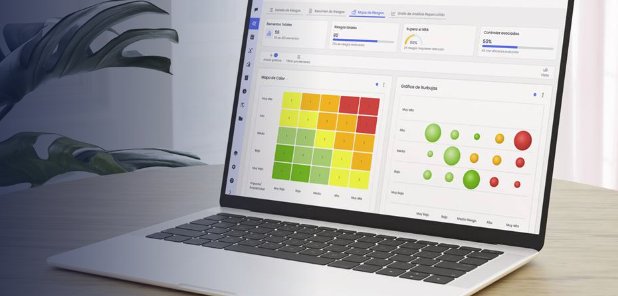
At GlobalSuite Solutions we have GlobalSuite® software, developed entirely by our team, which lets you implement, manage and maintain a Risk Management System based on the objectives you have set. It also lets you assess and track the treatment of the risks defined, helping you take COSO ERM from theory to day-to-day operations.
Want to see how it would work in your organisation? Request a demo and we will show you.