
GRC FAQFrequently asked questions
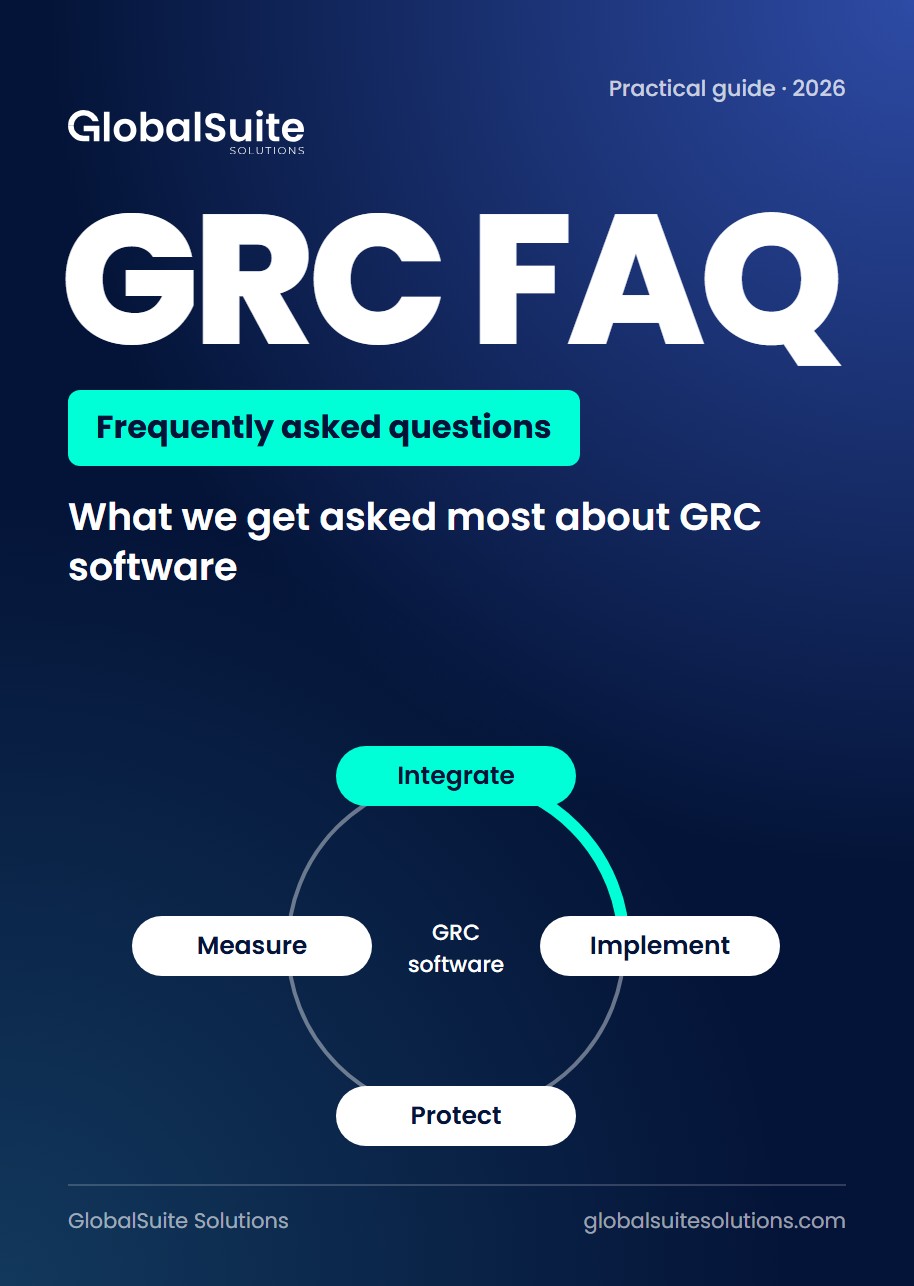
What we get asked most about GRC software
Plain answers on integrations, implementation, return, risk and data security in GlobalSuite®.
Download the guidePlatform
All-in-one GRC platform
AI built into every module
The common engine behind every module
GRC tailored to your industry
Connect GlobalSuite® to your tools
Standards and frameworks
ISO standards
Regulations
Document once, comply with all.
Resources
 Success storyEMT Madrid centralises its data protection management in GlobalSuite®Read the story

 G2 reviewsWhat the people who use GlobalSuite® every day say about itRead reviewsA customer? Leave a review
Popular searches
Practical guide · 2026
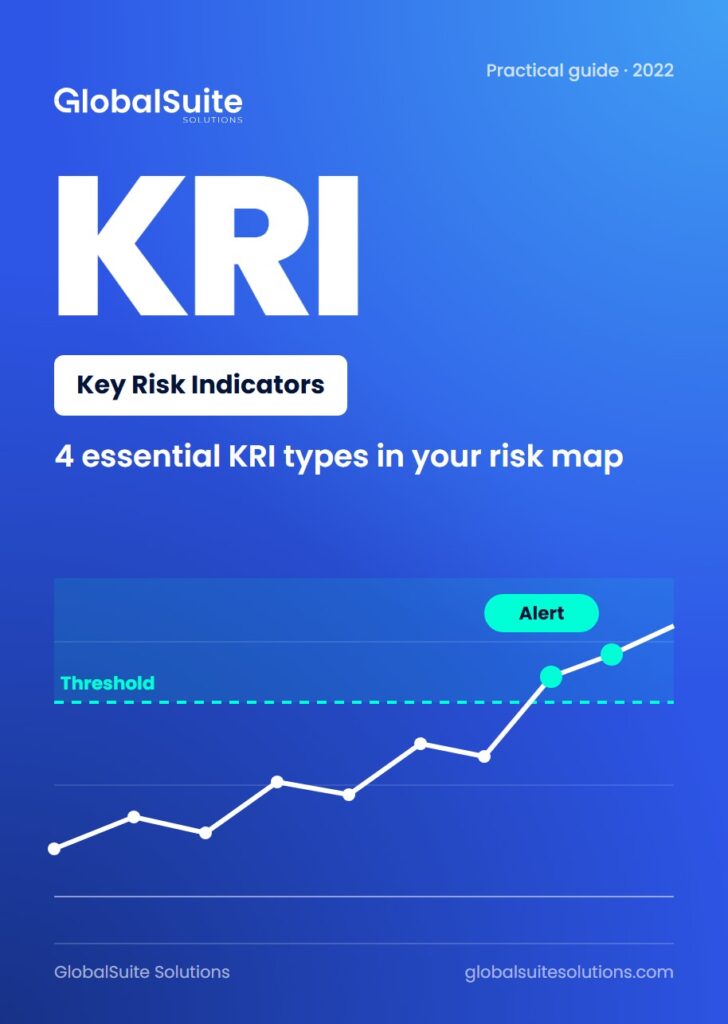
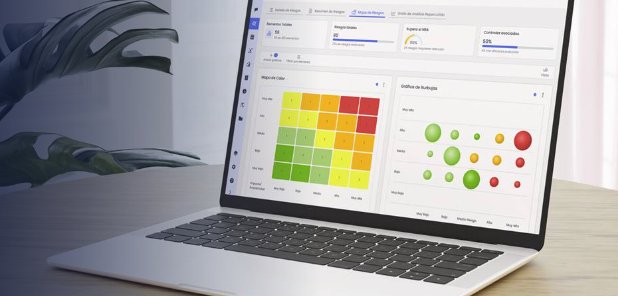
Key Risk IndicatorsWhich key risk indicators to put on your risk map, what each one measures and when it should raise an alert.
Download the free guideA risk is not always a threat. Measuring and monitoring risk properly helps you get ahead of change and, sometimes, turn a threat into an opportunity. Key risk indicators (KRIs) are the early signals that make that possible.
This guide explains how KRIs differ from KPIs and proposes four essential KRIs for the risk map, built on scorecard perspectives. It is based on our experience: each company will adjust the indicators and targets to its own objectives and sector.
In its 2011 paper on KRIs, COSO describes them as metrics that give an early signal of increasing risk exposure in different areas of the enterprise. If the company is a journey, KPIs are the map and KRIs are the route.
The guide explains what the KRI measures, where the alert threshold sits, what to do when it is crossed and what it is for. It also shows how each one looks in GlobalSuite®, from the supplier map to control effectiveness by owner.
Each type of risk has its own particularities, but good governance means monitoring them all on a single, complete risk map. A GRC platform such as GlobalSuite® lets you use the dependencies between risk types and see which objectives and critical processes each signal affects.
Plain answers on integrations, implementation, return, risk and data security in GlobalSuite®.
Download the guide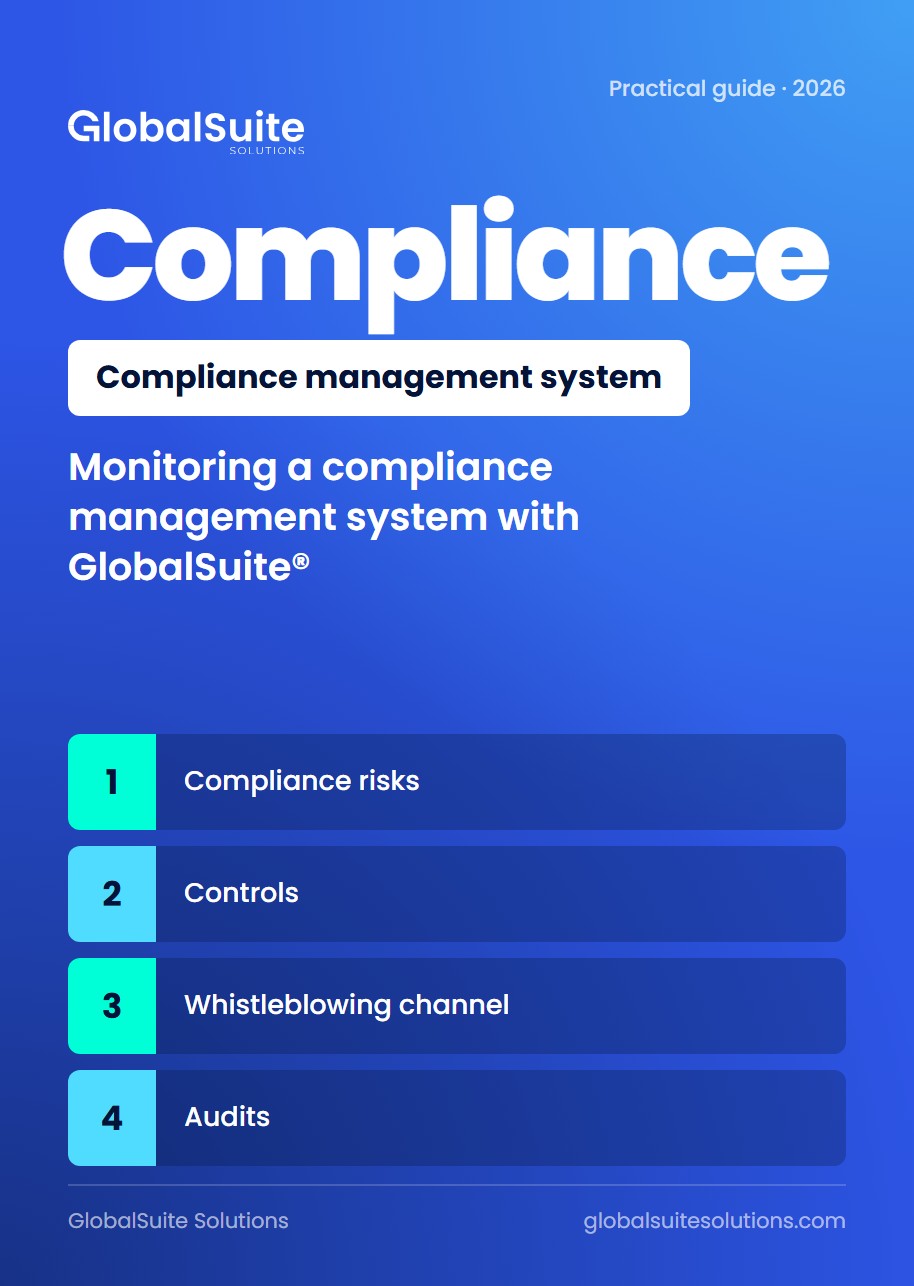
Every requirement of a compliance management system, from scope to audit, run in GlobalSuite®.
Download the guide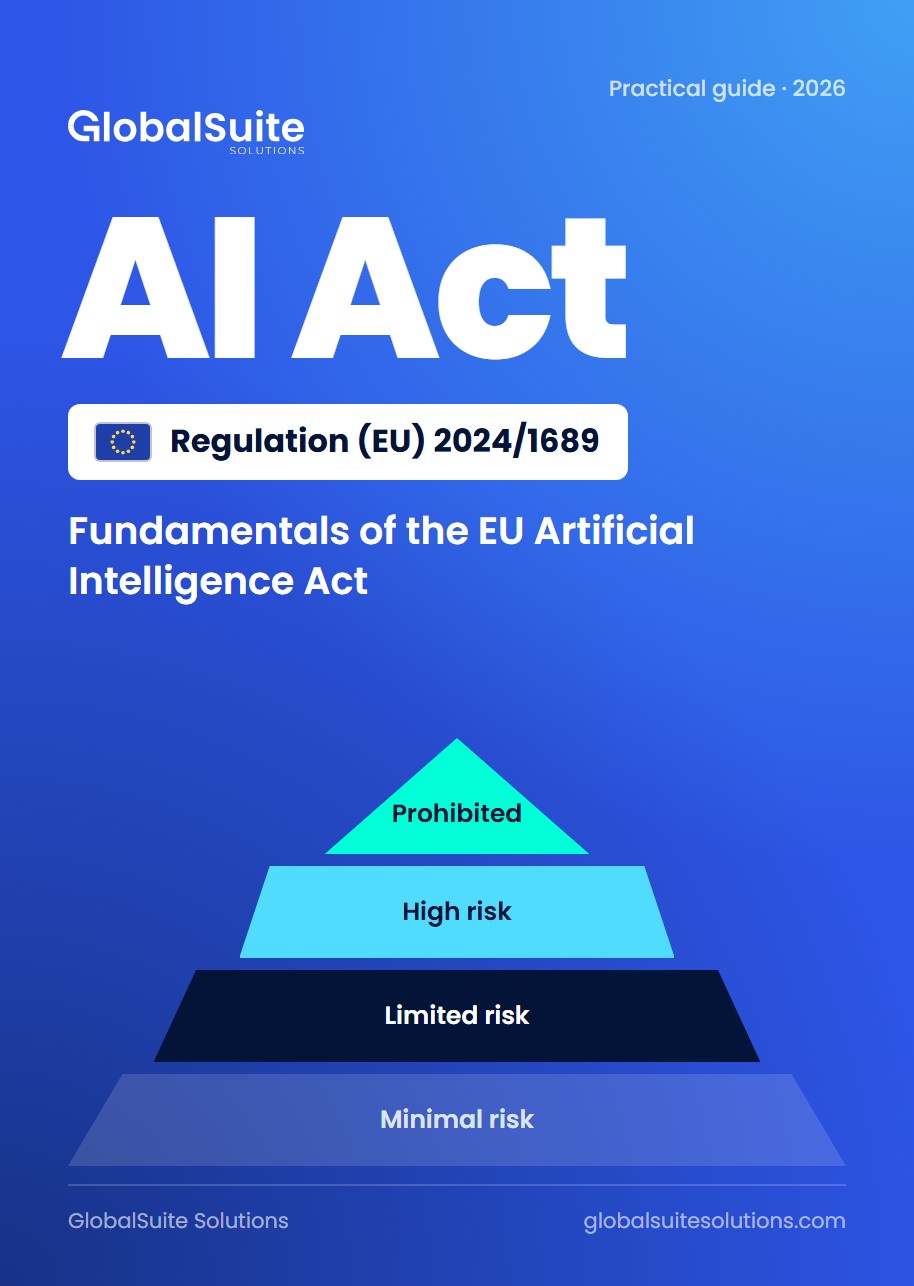
Deadlines, roles, risk categories, fines and first steps to prepare for the AI Act.
Download the guide