




ISO 14001 Standard, Fundamental Requirements
It is common to consider that environmental standards are only related to companies that directly affect the environment, such as those in the industrial sector; however, this view is incorrect. In recent years, society has evolved towards a model more aware of nature, because the environment is everyone’s responsibility.
It is for this reason that any organization can join the responsible collective of committed companies and implement environmentally friendly measures. To certify this corporate environmental culture, there are standards such as the ISO 14001 standard on which the Environmental Management System (EMS) is based.
ISO 14001:2026, the Current Version
The current version of this standard is ISO 14001:2026, published by ISO on 15 April 2026 to replace ISO 14001:2015. It keeps the High-Level Structure (HLS) shared by ISO management-system standards, which facilitates the integration of systems and optimizes their maintenance. ISO 14001 shares its structure with Quality (ISO 9001), Business Continuity (ISO 22301), and Occupational Health and Safety (ISO 45001) standards, among others.
Key changes in ISO 14001:2026
The 2026 revision is moderate in scope: it strengthens and clarifies the existing requirements rather than rewriting the standard, so organizations already certified to the 2015 version will not need major adaptation efforts. The most relevant changes are:
- Climate change and a broader set of environmental conditions: the context analysis must explicitly consider climate change, alongside other conditions such as pollution, biodiversity and the availability of natural resources.
- Planning and management of change: a new requirement to plan and control changes affecting the Environmental Management System before they are implemented.
- Strengthened life cycle perspective: its application is expanded both when defining the scope and when identifying environmental aspects and operational controls.
- Compliance obligations: the management of legal and other applicable requirements is reinforced.
- Externally provided processes, products and services: operational control extends beyond outsourced processes to cover externally provided products and services.
- Risks, opportunities and audits: the management of risks and opportunities is restructured and clarified, and every internal audit must have defined objectives.
The arrangement of chapters in the aforementioned ISO standards is as follows:
- Scope and field of application
- Normative references
- Terms and definitions
- Context of the organization
- Leadership
- Planning
- Support
- Operation
- Performance evaluation
- Improvement
The first three points are generalities of the standard that do not need to be documented, while the rest do define the minimum content of the management system. The keys to implementing the EMS lie in the proper execution of each of these points, which in the case of the Environmental ISO are:
- Context of the organization:
- First of all, the scope that the management system will have in the company must be determined.
- The context of the organization must also be defined, for which all factors and aspects that can affect the company are identified, whether positively or negatively (risks and opportunities respectively) and at an external or internal level. Within this identification, “interested parties” are also included, which can be: customers, suppliers, or other organizations. The 2026 version explicitly requires considering environmental conditions (including climate change, pollution, biodiversity and the availability of natural resources) and applying the life cycle perspective already when determining the scope of the system.
- Leadership:
- Having the commitment of Management and establishing the corporate environmental policy are essential measures.
- Environmental roles and responsibilities within the organization must be defined, so that all those involved know their obligations within the management system.
- Planning:
- In addition to the requirements of ISO 14001, there are requirements imposed by the legal regulations applicable to the company, defined by territorial laws that regulate specific aspects, such as: generated discharges and waste or emitted noise. The organization has to establish, implement and maintain a series of environmental objectives and targets, which must be measurable over time to check their evolution and achievement. ISO 14001:2026 also reinforces the management of these legal and other applicable requirements as compliance obligations.
- It is necessary to plan actions to address the detected risks and opportunities, including possible anomalous and emergency situations. ISO 14001:2026 also introduces a specific requirement for planning and managing change: any change affecting the EMS must be planned, recorded and evaluated before implementation, and all potential emergency situations must be identified, not only the foreseeable ones.

- Support:
- For its correct management, the entire EMS must be documented by procedures and records.
- Another aspect that supports the EMS is the promotion of training and communication actions that foster a sense of responsibility and environmental awareness inside and outside the company.
- Operations:
- Likewise, the organization must identify the environmental aspects linked to its activities, including externally provided processes, products and services, to know which ones have a more negative impact. Subsequently, take measures to avoid and minimize these current or potential environmental impacts.
- The life cycle of the products used must be defined, as it is necessary to manage it from their entry into the organization until they are withdrawn
- Performance evaluation:
- ISO 14001 requires that an annual management review be carried out, which includes all relevant information on the status and functioning of the EMS, adding the results of internal and external audits that have taken place in the organization. In the 2026 version, every internal audit must have clearly defined objectives.

- Improvement:
- Finally, the company must ensure the investigation of detected non-conformities, to find out the possible causes and take the necessary corrective actions to prevent their recurrence. Once the action plan has been executed, effectiveness review of the actions taken must be carried out. This will ensure constant evolution towards continuous improvement of the EMS.
At GlobalSuite Solutions, we have an expert team that can conduct environmental audits in your organization based on the requirements of a recognized standard such as ISO 14001.
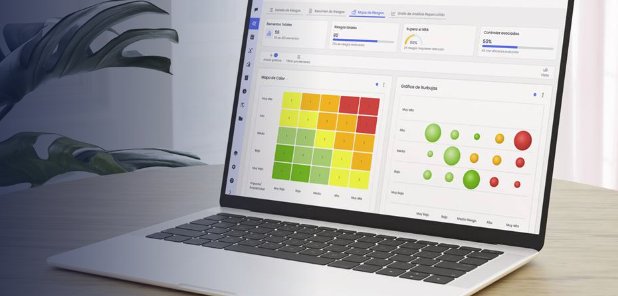
Additionally, we offer the necessary help and advice for the complete adaptation of your organization to the implementation of and transition to ISO 14001:2026 and other standards to obtain its certification. We have the GlobalSuite® software, entirely developed by our team, which allows the implementation, management, and maintenance of all the requirements demanded by the standard in all types of organizations and sectors.