




Information security protects information in any form (on a server, on paper or in an employee's head) so that it stays confidential, intact and available. Cybersecurity protects networks and information systems, and the people who use them, against threats that arrive through them. In everything digital the two overlap almost completely; the difference lies at the edges, and those edges decide which regulation applies to you and who is responsible for what.
What the official definitions say
ISO/IEC 27000, which sets the vocabulary for the whole ISO 27001 family, defines information security as the preservation of the confidentiality, integrity and availability of information. It says nothing about computers: the object is information, wherever it is.
The European definition of cybersecurity is in Article 2(1) of Regulation (EU) 2019/881, the Cybersecurity Act: "the activities necessary to protect network and information systems, the users of such systems, and other persons affected by cyber threats". The NIS2 Directive doesn't create its own definition: Article 6 refers back to this one. Here the object is no longer just information, but also systems and people.
The NIST glossary takes the same idea from the US side: cybersecurity prevents damage to computers and electronic communications systems, and the information they contain, to ensure their availability, integrity, authentication, confidentiality and non-repudiation.
Where they overlap and where they don't
- Paper files and physical archives
- Conversations and what people know
- Documents that are printed or sent by courier
- Phishing and email impersonation
- Ransomware and data theft
- Stolen passwords and unauthorised system access
- Leaks from cloud applications
- Attacks that stop a controller or a production line
- Denial of service against a website with no sensitive data
- Fraud against users through your systems
A paper file someone leaves on the printer is an information security problem with nothing "cyber" about it. A conversation about a confidential deal in a restaurant isn't cyber either. At the other end, an attack that stops a controller on a production line is pure cybersecurity even if not a single record leaks: what is lost is the service. And everything in between (phishing emails, ransomware, stolen passwords) is both at once.
| Information security | Cybersecurity | |
|---|---|---|
| What it protects | Information, on any medium | Networks, systems, their users and the services they provide |
| Goal | Confidentiality, integrity and availability of information | Preventing, detecting, responding to and recovering from attacks through systems |
| Typical threats | Human error, leaks, physical theft, unauthorised access and cyber attacks too | Malware, intrusions, denial of service, social engineering through digital channels |
| Reference frameworks | ISO/IEC 27001 and 27002 | NIS2, NIST CSF, ISO/IEC 27032 |
| Outside the other | Paper, conversations, physical archives | Industrial systems and services that stop even when no information is lost |
ISO 27001 already includes cybersecurity
The best proof that information security is the wider umbrella is Annex A of ISO 27001:2022. Its 93 controls are split into four themes, and two of them have nothing to do with technology:
More than a fifth of the controls deal with people and facilities: screening, awareness, physical perimeters, clear desks. And ISO 27002, which develops those controls, tags each one with a "cybersecurity concepts" attribute (identify, protect, detect, respond and recover), which are the functions of the NIST CSF. In other words, a well-built information security management system already covers cybersecurity and labels it.
It works the other way round too. Article 21 of NIS2, a cybersecurity law, requires human resources security, access control and asset management measures. In practice both disciplines ask for almost the same things; only the starting point changes.
What changes in practice
Mainly the scope. If your obligation comes from NIS2, the focus is on the systems that support your essential or important services, and on reporting incidents to the CSIRT. If it comes from ISO 27001, you define the scope yourself, and it can include paper archives, HR processes or a call centre.
Who is responsible also changes. In many companies the CISO handles both, but when cybersecurity sits under IT and information security under compliance or risk, gaps appear: paper and suppliers with no system access end up without an owner, and industrial systems on the shop floor end up with nobody assessing them from a risk point of view.
What we would do
One programme, not two. It makes sense to start from the information security management system, because it is the wider framework, and to treat cybersecurity as a part of it with its own indicators and its own response plan. What doesn't make sense is maintaining two risk assessments, two asset inventories and two sets of controls that say the same thing in different words, one for the ISO 27001 auditor and another for NIS2.
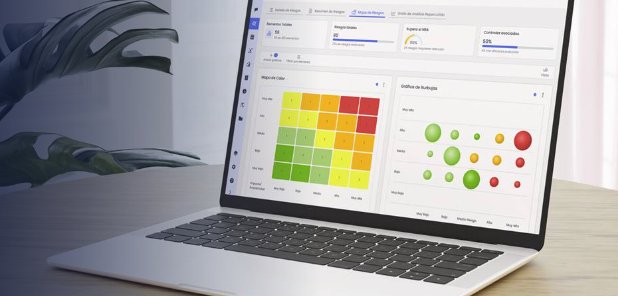
In the GlobalSuite® information security module the asset inventory and the risk assessment are shared, and each control can be linked to the requirements of ISO 27001 and NIS2 at the same time, so the same evidence serves several audits. If you'd like to see how it would look with your frameworks, get in touch.
Official sources: ISO/IEC 27000, ISO/IEC 27001:2022, Regulation (EU) 2019/881, Article 2, Directive (EU) 2022/2555 (NIS2), Articles 6 and 21 and the NIST glossary. Content reviewed in October 2026.